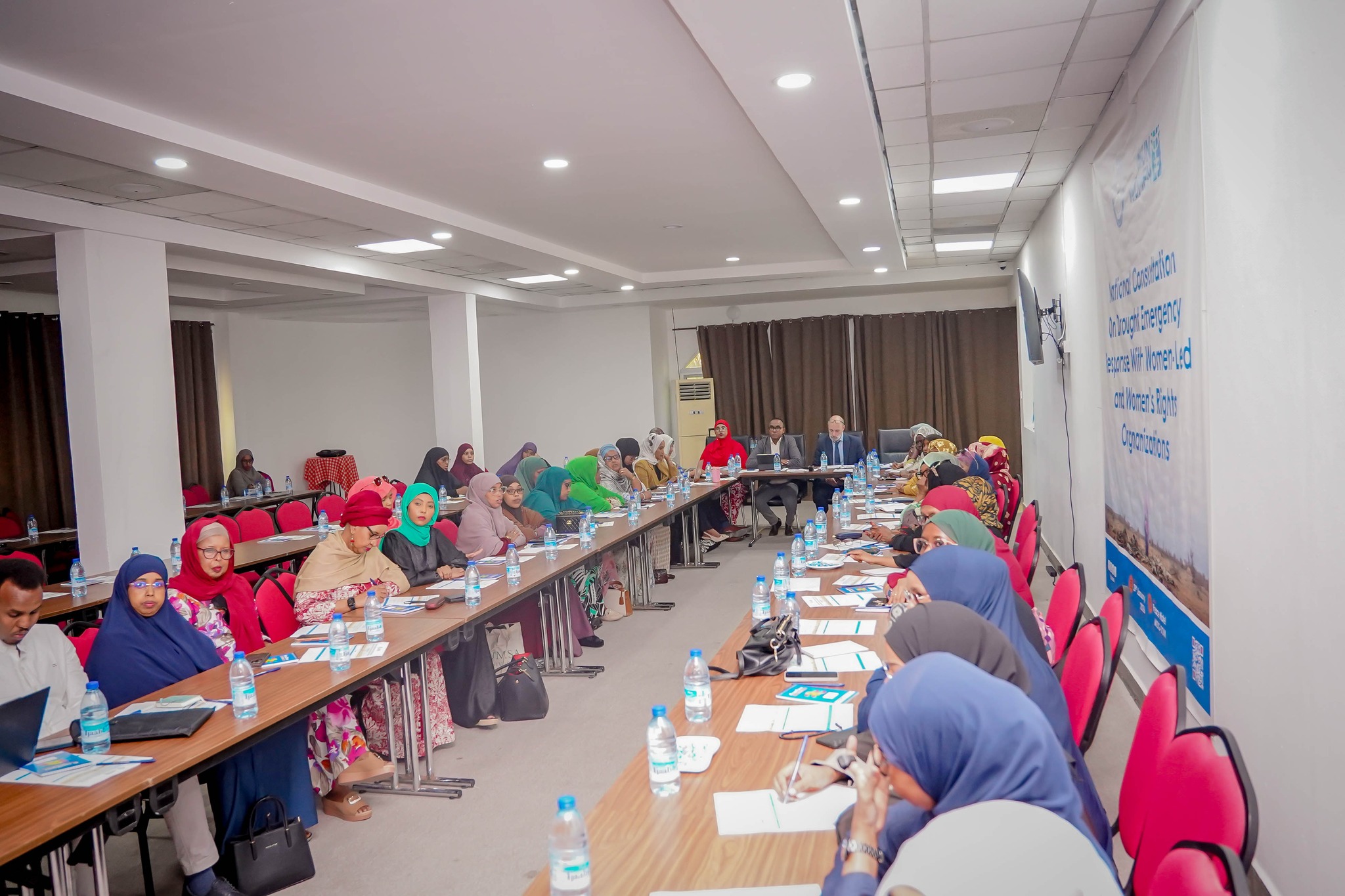
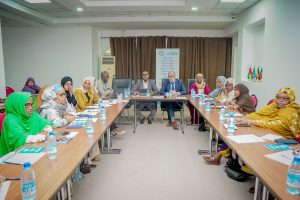
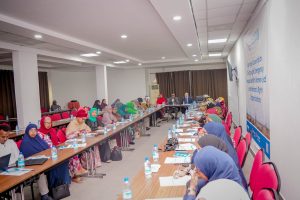
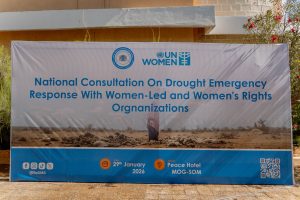
The Somali Disaster Management Agency (SoDMA) has launched a National Consultation Conference in Mogadishu focused on strengthening the emergency response to the ongoing drought, in partnership with women-led organizations and women’s rights advocacy groups.
The conference brought together government institutions, humanitarian partners, civil society organizations, and women’s groups to reinforce coordination, identify priority response actions, and ensure that the most vulnerable communities—especially women, children, and displaced households—receive timely and effective assistance.
Recurrent drought worsening food insecurity and displacement
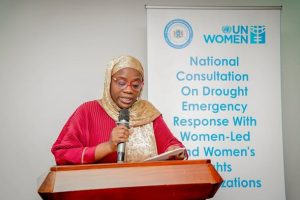
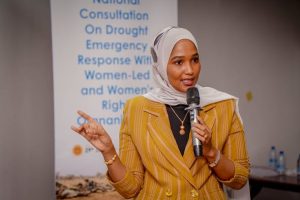
UN Women Country Programme Manager, Rukia Mohamud, said recurrent droughts have once again severely affected Somalia, worsening food insecurity, displacement, and life-threatening risks for vulnerable households. She noted that women and girls—who account for nearly 80% of those affected—face the greatest risks, including gender-based violence, loss of income, disruption of essential services, and increased burdens of unpaid domestic work.
Rukia Mohamud shared the example of a family in Baidoa, where a mother of five was displaced after losing her livestock and access to water, and is now struggling to survive under harsh conditions in an internally displaced persons (IDP) camp.
SoDMA calls for rapid and unified national action
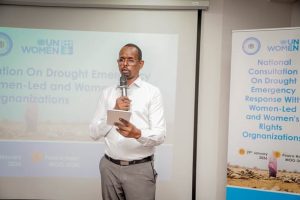
Speaking at the conference, the Commissioner of the Somali Disaster Management Agency, Mr. Mahmoud Moallin Abdulle, emphasized the importance of a rapid and unified response to address the impacts of the drought. He stated that SoDMA conducted extensive consultations with various segments of society ahead of the worsening drought and formally communicated the situation to the Federal Government of Somalia and the Upper House to ensure a shared national understanding and a coordinated joint plan.
The Commissioner also highlighted the critical role of women in humanitarian response, noting that women’s participation is essential to accelerating and facilitating effective assistance and improving last-mile delivery to affected communities.
UN urges stronger cooperation and community unity
George Conway, the Deputy Special Representative of the UN Secretary-General for Somalia and Humanitarian Coordinator, underscored the importance of cooperation and social unity as Somalia’s humanitarian situation continues to deteriorate. He called on women, civil society organizations, and relevant institutions to work together to respond effectively to the drought’s impacts.
He further urged the government, communities, and the international community to strengthen collaboration to reduce drought-related suffering and ensure that emergency assistance reaches affected people—especially children, women, and other vulnerable groups. Conway emphasized that the participation of women and civil society organizations is key to the success of response plans, given their role in guiding, facilitating, and delivering humanitarian assistance at community level.
Office of the Prime Minister highlights women as a unifying force
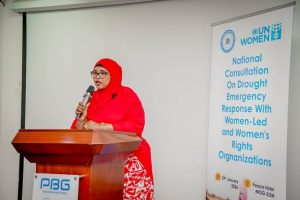
Amina Keyf Ahmed Samatar, Director of Documentation and Archives and Women’s Affairs Coordinator at the Office of the Prime Minister, highlighted the central role of women in protecting families, communities, and the economy. She emphasized that women are ready to contribute actively to drought response through awareness-raising, mobilization, and support for vulnerable groups.
She urged government institutions and civil society organizations to work closely with women to develop sustainable solutions that reduce drought impacts, calling for Somali women to be recognized as a unifying force in addressing recurrent drought and other disasters.
NEOC briefs on humanitarian conditions and urgent needs
The Director of the National Emergency Operations Centre (NEOC), Mr. Hassan Isse, presented an overview of the humanitarian situation and the ongoing emergency response to the drought. He noted that the drought has affected millions of people, causing severe food shortages, lack of access to safe water, and widespread displacement.
His presentation also highlighted key indicators, including the scale of displacement, levels of hunger, and urgent needs related to health services and water supply.
Plan International presents Rapid Gender Assessment findings
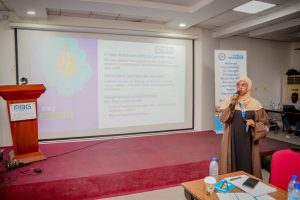
Ms. Siam Mahamoud, Head of Programmes at Plan International, presented the findings of a Rapid Gender Assessment (RGA) conducted to examine the drought situation and its impacts on women, children, and communities across Somalia. The assessment highlighted gender-specific vulnerabilities and priority needs emerging from the crisis.
The conference was described as part of the joint efforts between humanitarian partners and the Federal Government of Somalia to strengthen understanding of the severe drought impacts. The drought—driven by climate change and reduced rainfall—has particularly affected women, children, and other vulnerable communities.
OCHA outlines 2026 funding requirements
Ms. Amal Abubakar, Humanitarian Affairs Officer at OCHA, presented a briefing on the 2026 funding requirements, emphasizing the urgency of mobilizing timely humanitarian support. She stressed that strong international cooperation is critical to reduce the impacts of the drought and ensure that effective assistance is delivered efficiently and transparently to vulnerable Somali communities.
Strengthening coordination for an effective response
The National Consultation Conference reinforced community partnership, inter-agency coordination, and women’s engagement to reduce the drought’s impact on people and the environment, and to ensure a timely, effective, and inclusive emergency response across Somalia.


0 Comments