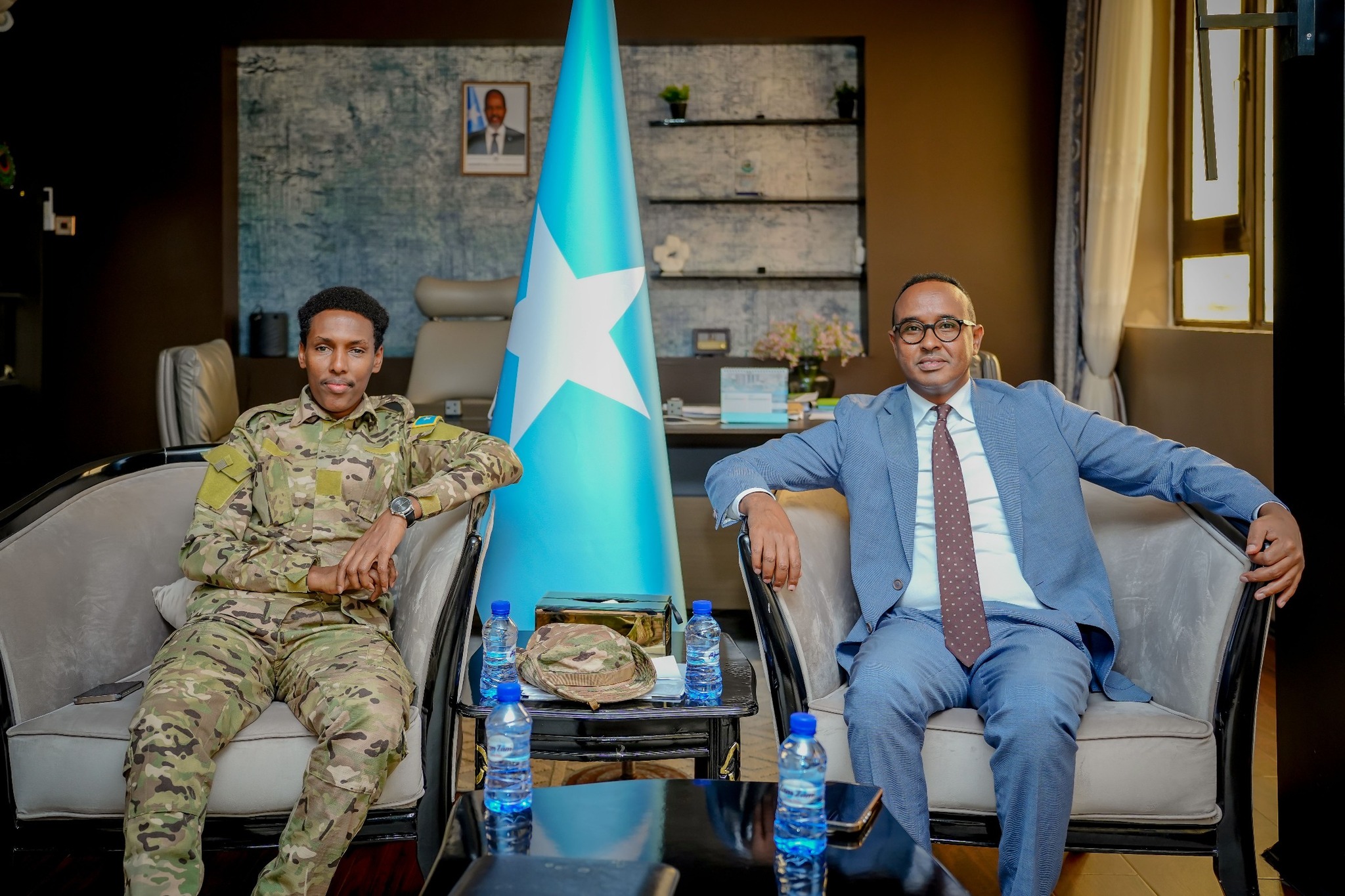
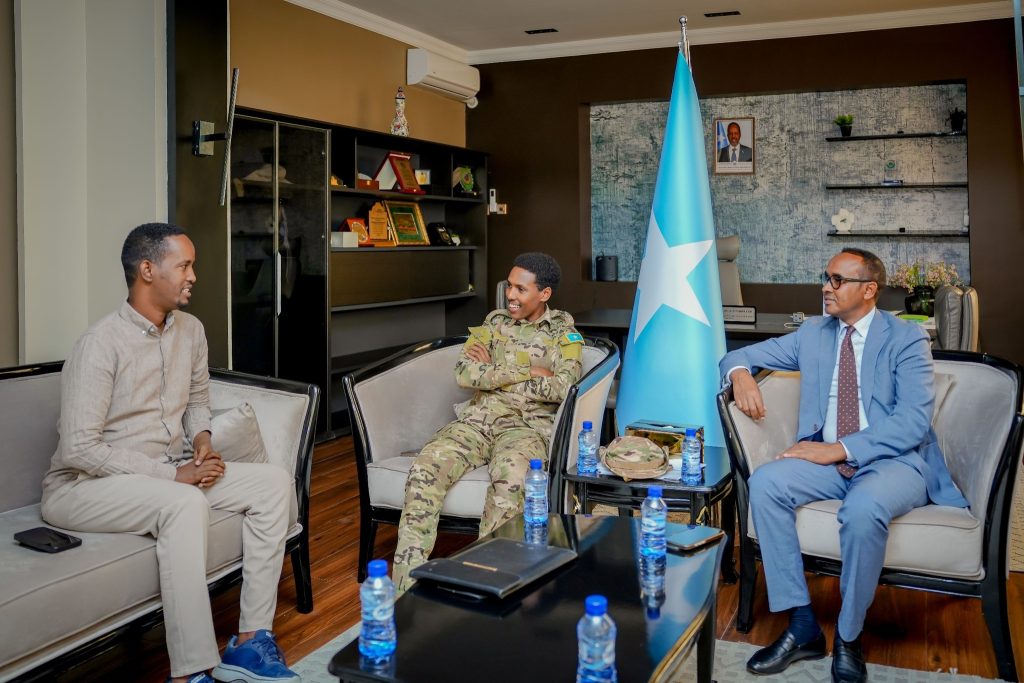
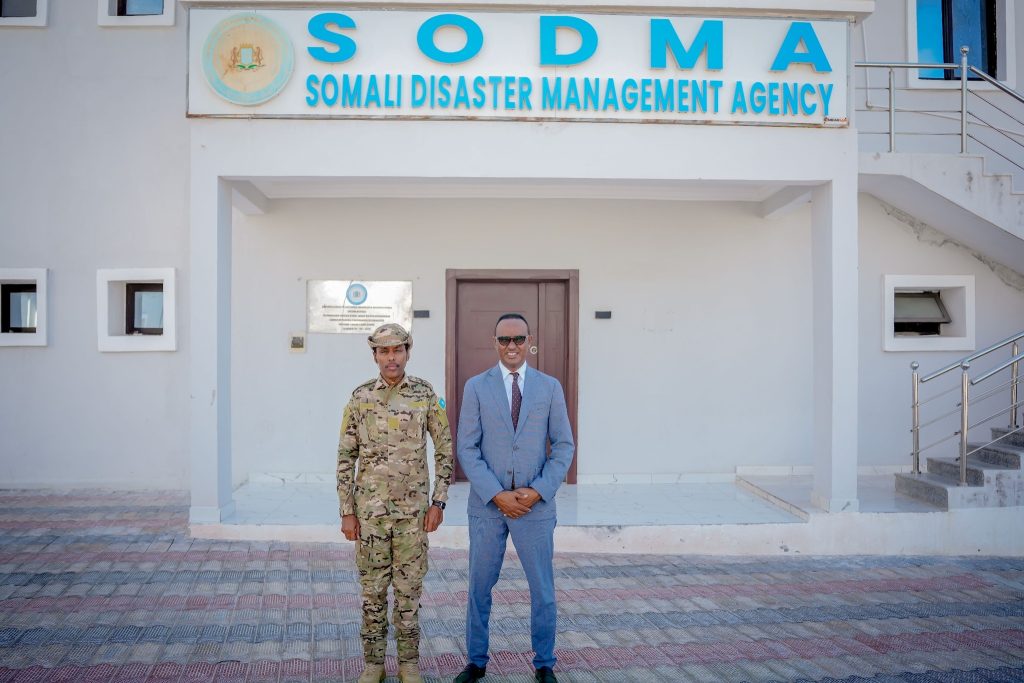
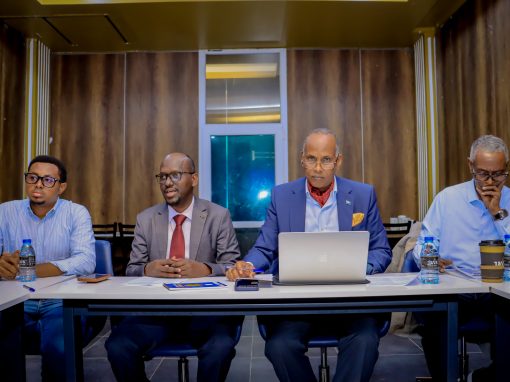
MOGADISHU, SOMALIA — This morning, the office of the Commissioner of the Somali Disaster Management Agency (SoDMA), Mr. Mohamud Moalim Abdulle, hosted a strategic meeting with the Commander of the Somali National Army (SNA), Major General Odowaa Yusuf Raage. The meeting focused on strengthening joint cooperation in providing humanitarian aid and supporting stabilization efforts in areas planned for imminent liberation.
The Commissioner of the Agency, Mr. Abdulle, underscored the importance of this coordination, stating: “Our partnership with the National Army is not merely logistical cooperation; it is a joint commitment to ensure that every step taken to liberate our land is followed by immediate relief efforts to guarantee the safety and well-being of our citizens.”
For his part, the Commander of the Somali National Army, Major General Odowaa Yusuf Raage, emphasized the importance of this civil-military cooperation, stating: “The success of our operations is not just about liberating land; it’s about securing a stable future for our people. Our partnership with SoDMA ensures that humanitarian support follows our forces, transforming military gains into lasting stability for the communities.”
It was agreed that SoDMA would be responsible for leading and coordinating all humanitarian activities and delivering emergency aid to these areas immediately upon liberation. To ensure the highest level of coordination, both parties agreed to form a joint technical committee comprising representatives from the National Army and SoDMA. This committee will work on implementing the joint plans to provide support and relief to the population in the targeted areas.
Visit to the National Early Warning Center
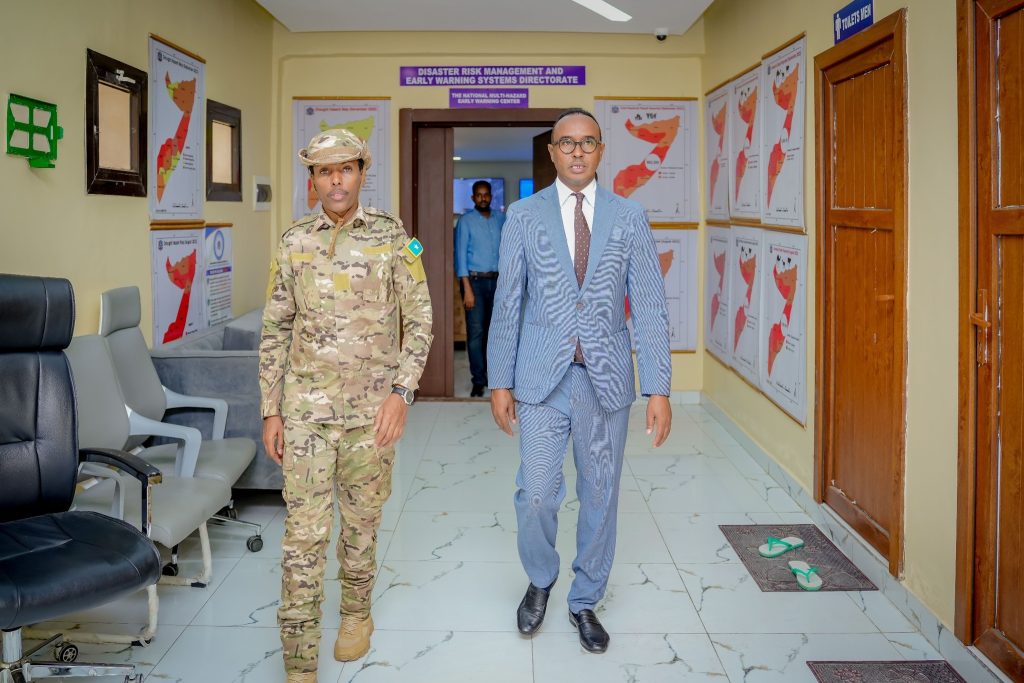
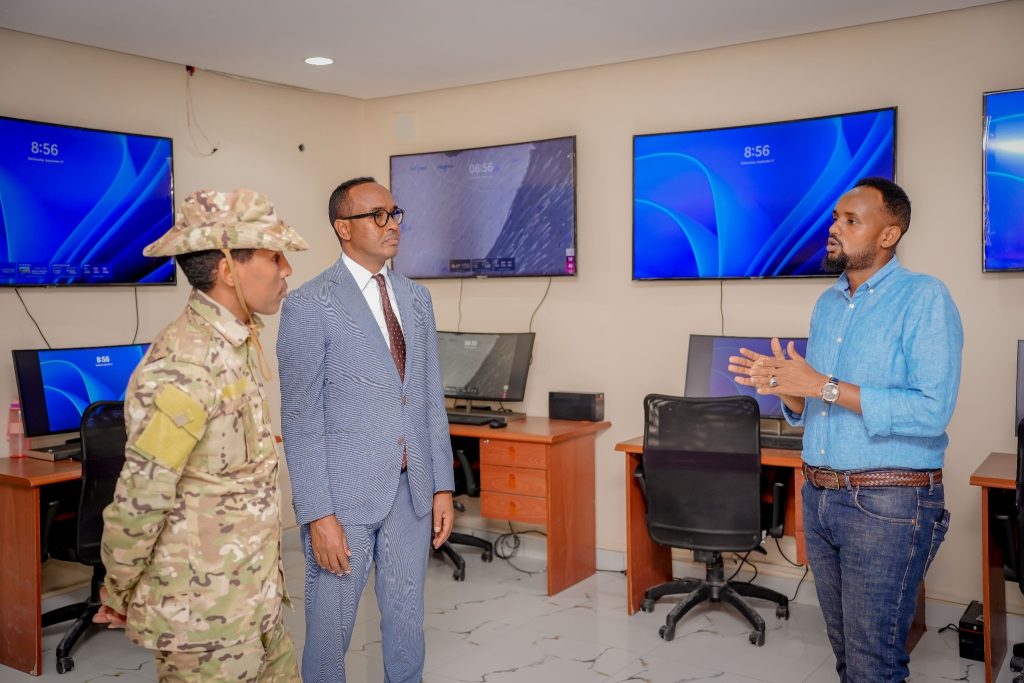
Following the meeting, the SNA Commander visited the National Early Warning Center, a vital division within SoDMA. He was warmly welcomed by the Acting Director of the Department, Mr. Abdulkadir Omar Hirsi. During the visit, the Commander was briefed in detail on the center’s operations and its crucial role in collecting, analyzing, and disseminating data related to various hazards.
It was explained that the center utilizes advanced technology to obtain accurate, real-time information from multiple sources, enabling it to provide early warnings about risks. This helps to ensure the safety of relief corridors and the protection of aid teams, making it a valuable asset for both military and humanitarian operations.
This high level of coordination underscores the commitment of government agencies to strengthen cooperation to address both humanitarian and security challenges, and to transform military gains into stability and recovery that impacts the local communities.


0 Comments