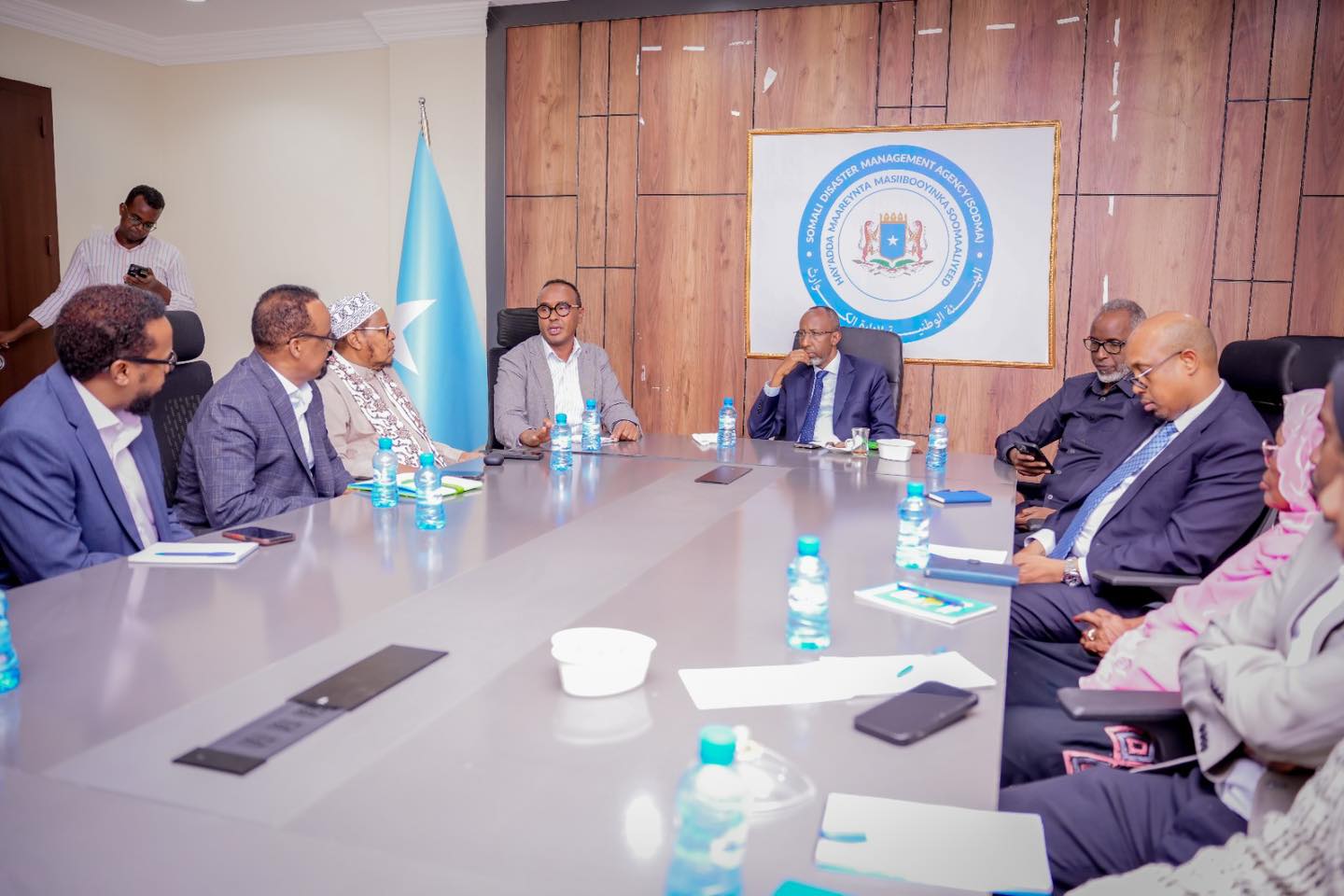
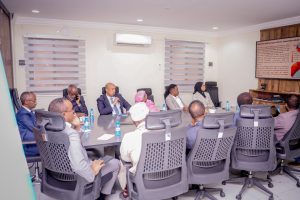
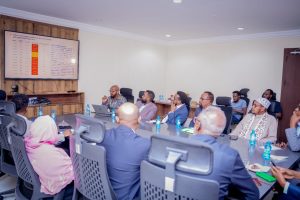
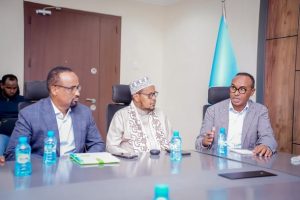
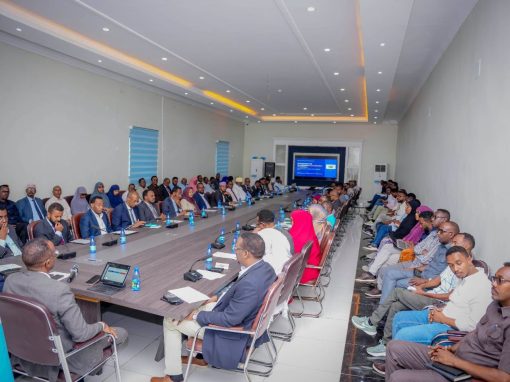
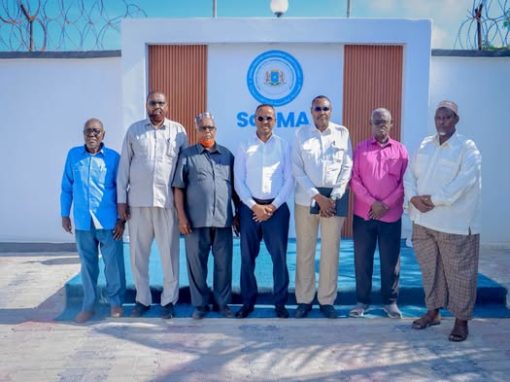
The Chair of the National Drought Response Finance Committee and Minister of Education, Culture and Higher Education of the Federal Government of Somalia, Mr. Farah Sheikh Abdulkadir, chaired an emergency national relief meeting to discuss the ongoing drought situation in the country.
The meeting was attended by the Commissioner of the Somali Disaster Management Agency, Mr. Mahmoud Moallin Abdulle; the State Minister at the Office of the Prime Minister, Mr. Hirsi Jama Gani; the Deputy Director at the Office of the Presidency, Mr. Mohamed Amin Sheikh; as well as federal officials, other government leaders, religious scholars, and business representatives. All participants reaffirmed their commitment to supporting drought-affected communities and contributing to the national response.
During the meeting, the latest drought updates were presented, indicating that conditions have reached a critical level and are severely affecting livelihoods, as well as the well-being of both people and livestock.
Participants emphasized the urgent need to accelerate the national response, strengthen coordination across government institutions, and enhance cooperation with religious leaders, the business community, and civil society so that the impacts of the drought can be addressed quickly and collectively, and vulnerable groups can be protected.
The Commissioner of the Somali Disaster Management Agency stated that the country has entered a difficult period in which the lives of both people and livestock are at risk. He called on all members of society to take part in the emergency response, especially through mobilizing financial contributions and life-saving assistance.
In conclusion, the Chair of the National Drought Response Finance Committee reaffirmed the Federal Government of Somalia’s commitment to prioritizing drought response and continuing national and international efforts to reduce the impacts of natural disasters.
The Federal Government of Somalia stressed that strong cooperation among government institutions, religious leaders, the business community, and civil society is essential to saving lives and protecting livelihoods affected by the drought.




0 Comments